
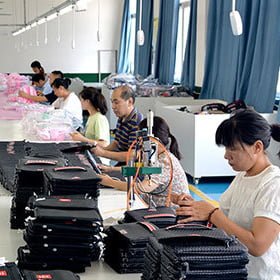
Finding a Reliable Luggage Factory in China Is Honestly Not Easy
If you’re searching for an OEM luggage manufacturer in China right now, chances are… you’ve already talked to quite a few suppliers.
Maybe one factory gave you an unbelievably low quote, then suddenly stopped replying for days.
Maybe another supplier sent beautiful product photos, but when the sample finally arrived, the wheels felt loose, the zipper looked cheap, and the shell seemed thinner than expected.
Yeah, we hear stories like this all the time.
One customer from Europe once told us:
“The luggage looked fine in pictures, but after one airport trip the corner cracked.”
That sentence stuck with us for a long time because it perfectly describes the luggage industry.
A suitcase can look premium online and still perform badly in real life.
And honestly? These days, real factories and trading companies sound almost identical online. Everybody says:
- professional manufacturer
- strict quality control
- competitive pricing
- fast delivery
From a buyer’s perspective, it’s genuinely difficult to tell the difference.
So instead of using too many polished marketing words, maybe it’s better if we simply explain how we actually work as a luggage manufacturer in China.
Why China Became the Global Center of Luggage Manufacturing
A lot of people still associate China with “cheap manufacturing”.
That idea is honestly outdated.
Today, China’s real advantage is the manufacturing ecosystem itself.
For example, if we need:
- PC shell materials
- ABS injection suppliers
- aluminum frame accessories
- wheel systems
- zipper suppliers
- trolley handle components
…most of them are nearby.
Sometimes within the same industrial zone.
And this matters much more than many overseas buyers realize.
Because when you need to adjust shell thickness, improve wheel performance, or test a new texture, things move quickly.
You don’t wait two weeks for basic communication between suppliers.
Sometimes clients send us a rough sketch or reference photo late at night through WhatsApp, and by the next morning we’re already discussing structure feasibility and mold solutions.
That speed is difficult to replicate without a mature supply chain.
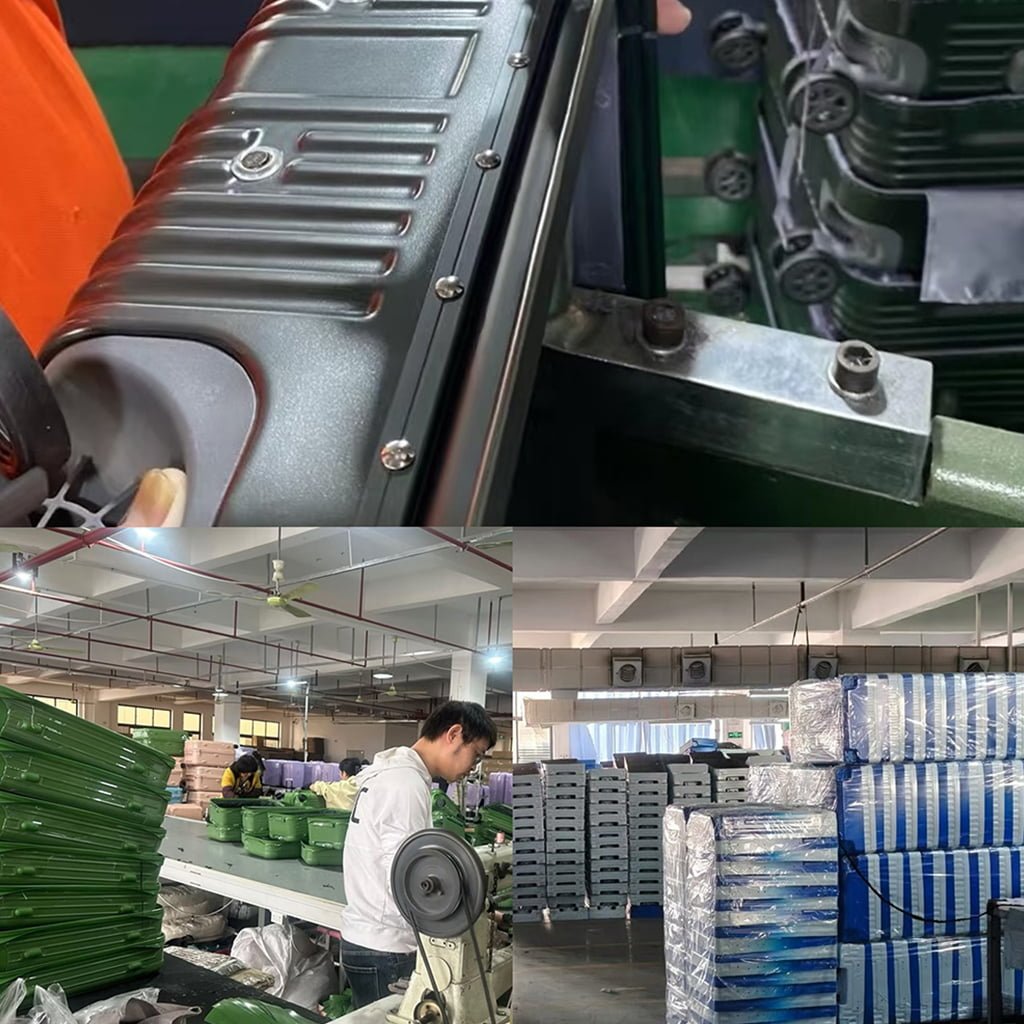
What Kind of Luggage We Actually Produce
We mainly focus on mid-range and premium luggage manufacturing.
Not the ultra-cheap “one trip only” type of suitcase.
Because to be honest, factories competing only on lowest price usually create problems later:
- weak wheels
- broken handles
- damaged corners
- unstable zippers
- high return rates
Especially for Amazon sellers, bad reviews can destroy a product listing very quickly.
So over time, many of our clients shifted focus from “lowest price” to “better long-term quality stability”.
Hard Shell Luggage
Most of our OEM projects are hard shell luggage products, including:
- ABS luggage
- PC luggage
- PC+ABS mixed shell luggage
Recently, PC material has become much more popular in Europe and North America because customers care more about:
- lightweight feeling
- impact resistance
- flexibility
- durability during air travel
Some buyers initially prefer ABS because it’s cheaper. But after comparing samples side by side, many eventually upgrade to PC or PC+ABS.
The feel is simply different.
Aluminum Frame Luggage
This category has been growing surprisingly fast.
Especially among:
- business travel brands
- minimalist lifestyle brands
- premium travel startups
And honestly… aluminum frame luggage photographs extremely well online.
That matters more than people admit.
A customer scrolling through Amazon or Shopify usually decides within seconds whether a product “feels premium”.
Sometimes even small visual details can influence conversion rates.
Travel Luggage Sets
2-piece and 3-piece luggage sets remain very stable sellers.
Especially for:
- eCommerce brands
- wholesale distributors
- retail stores
Clients often focus on:
- nested storage
- matching colors
- expandable compartments
- wheel consistency
- packaging efficiency
These details sound small, but they directly affect customer experience.
OEM Customization — This Is Usually Where Factories Start Falling Apart
A lot of suppliers say they support OEM customization.
But sometimes what they really mean is:
“We can print your logo.”
Real OEM manufacturing goes much deeper than logo printing.
For example, clients often request:
- quieter wheels
- anti-scratch texture
- stronger trolley tubes
- lighter shell weight
- reinforced corners
- wider handles
- upgraded lining materials
These changes affect:
- tooling
- structure engineering
- material selection
- assembly methods
- production cost
And honestly, this is where experience starts showing.
Because customization is not only about appearance. It’s also about balancing:
- durability
- production feasibility
- shipping efficiency
- target retail pricing
Sometimes clients ask for very ambitious designs, and our job is to explain what works realistically and what may create problems later.
Good communication during this stage saves everyone trouble.
Small Branding Details Matter More Than People Think
One small metal logo plate can completely change the perception of a suitcase.
Same product. Different feeling.
We’ve seen brands increase retail pricing simply by improving:
- zipper pullers
- wheel finish
- logo placement
- lining quality
- handle texture
Consumers notice these things subconsciously.
Especially online, where customers cannot physically touch the product before buying.
This is why branding details matter so much in luggage manufacturing today.
Our Production Process (Nothing Fancy, Just Real Workflow)
We prefer keeping the process transparent because it avoids misunderstandings later.
Step 1 — Understanding Your Market
Before quoting, we usually ask several questions:
- Which market are you targeting?
- Amazon or retail stores?
- Premium or mid-range positioning?
- Lightweight or durability focus?
Because luggage designed for Germany may be very different from luggage sold in Southeast Asia or the Middle East.
Customer habits, airline handling conditions, climate, and retail expectations all influence product decisions.
Step 2 — Sampling
This stage is always interesting.
Some samples go smoothly.
Some need adjustments.
Sometimes:
- shell colors look different under sunlight
- wheels sound louder than expected
- trolley handles feel too short
- textures appear too glossy
That’s normal.
Good product development usually comes from small corrections and continuous improvement.
Step 3 — Mass Production
Once samples are confirmed:
- shell molding begins
- assembly starts
- lining gets stitched
- wheels and handles are installed
- QC inspections run continuously
Production periods before major holidays become especially busy.
That’s why planning ahead is important.
Quality Control Is Probably the Most Underrated Part
Almost every factory says:
“We have strict QC.”
But the real question is:
How serious is the quality control process actually?
For luggage products, weak points are usually:
- wheel durability
- zipper lifespan
- trolley stability
- corner impact resistance
So we test repeatedly.
Not because it sounds impressive in a catalog, but because once containers arrive overseas, fixing problems becomes expensive and stressful for everyone involved.
Our testing usually includes:
- wheel rolling tests
- drop tests
- handle load testing
- zipper cycle testing
And yes, sometimes products fail testing.
That happens.
Honestly, we’d rather discover problems inside the factory than let customers discover them later.
Export Experience Matters More Than People Think
A supplier may know how to manufacture luggage…
…but still not understand international business requirements.
That difference becomes obvious very quickly.
For example:
- Amazon packaging rules
- barcode placement
- shipping carton optimization
- loading efficiency
- EU compliance standards
These things sound boring until shipments get delayed because of them.
We currently work with clients from:
- USA
- Germany
- UK
- France
- Middle East markets
- Southeast Asia
Different markets definitely have different expectations.
American customers usually prioritize practicality and durability.
European buyers often care more about finish, consistency, and design details.
Final Thoughts — Choosing a Factory Is More Like Choosing a Long-Term Partner
Price matters. Of course it does.
Everybody compares quotations.
But after years in this industry, honestly, the projects that last are usually based on:
- stable communication
- consistent quality
- realistic timelines
- problem-solving ability
Not simply the cheapest price.
A good luggage supplier should reduce stress, not create more of it.
That’s probably the simplest way to explain it.
Let’s Talk About Your Project
If you already have:
- an idea
- a sketch
- a reference image
- or even just a rough concept
…feel free to send it over.
We can discuss:
- material suggestions
- estimated pricing
- MOQ options
- production timing
- customization possibilities
No pressure.
Sometimes even a short conversation helps clarify the direction much faster.