
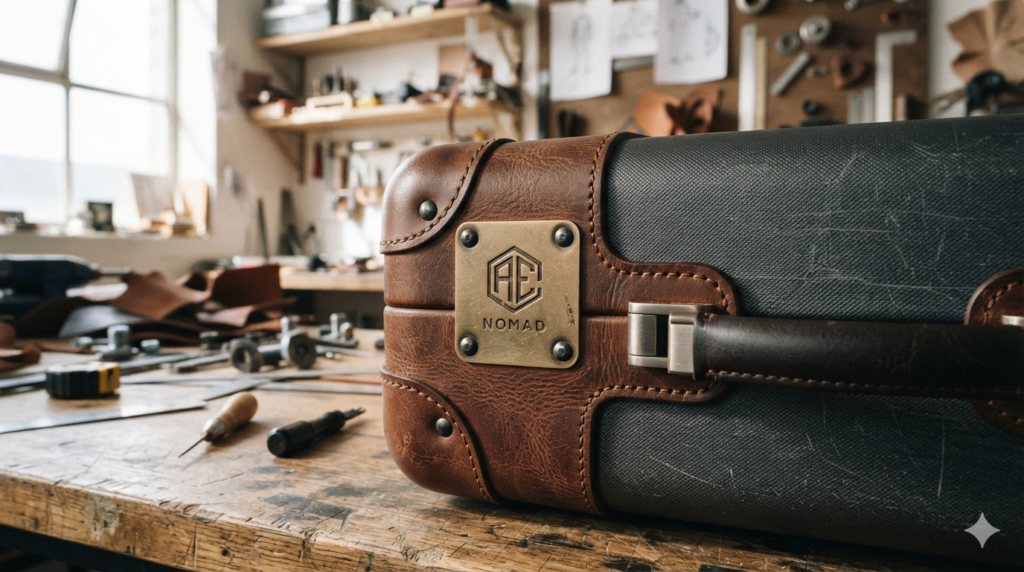
Introduction — Why Logo Crafting Dictates Suitcase Market Value & Durability
Unlike everyday promotional tote bags or casual soft backpacks, travel luggage is heavy-duty mobile equipment. A suitcase endures relentless friction on airport conveyor belts, high-impact handling during cargo loading, severe temperature shifts, and constant rough transport across tarmac and cobblestones. Under these punishing real-world transit conditions, your brand’s logo isn’t merely a decorative graphic—it is a direct indicator of overall product quality and manufacturing integrity.
For B2B procurement managers, private label brand owners, and OEM sourcing specialists in North America and Europe, selecting the wrong logo application technique is a costly misstep. An ill-suited branding method often leads to premature peeling, scratched graphics, high factory sample rejection rates, prolonged production lead times, and inflated BOM (Bill of Materials) costs. More critically, a degraded or flaking logo rotating on an airport carousel actively damages your brand equity in full public view.
⚠️ B2B Procurement Alert: Manufacturing audit data indicates that over 35% of custom luggage sample rejections during OEM sampling stem directly from mismatched logo techniques on hard shell surfaces or technical fabrics. Selecting an unverified application method directly inflates warranty claims and return rates caused by transit wear and tear.
This comprehensive guide breaks down the two most dominant branding techniques in professional luggage manufacturing: Screen Printing and Debossing/Embossing. Written from a factory-floor perspective, we examine their technical mechanisms, material compatibility, tooling economics, and transit durability to help you make an optimized, high-margin B2B sourcing decision.
Deep-Dive #1: Screen Printing for Custom Suitcases
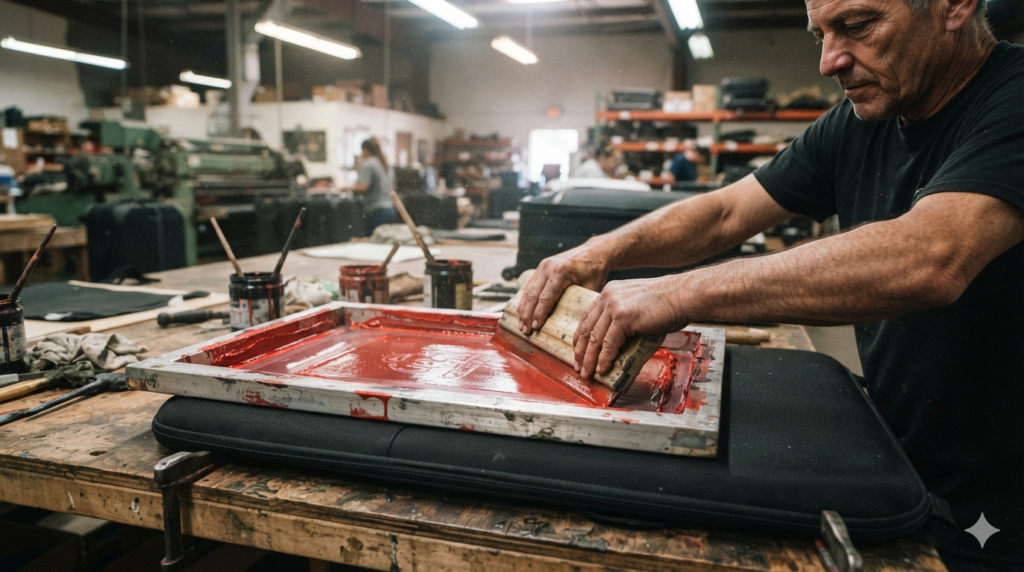
Screen printing (or silkscreening) remains one of the most widely used branding methods in volume luggage manufacturing. The technical mechanism involves transferring a pigment-rich industrial ink—typically solvent-based, polyurethane, or UV-cured—onto a substrate through a tensioned mesh screen where non-printing areas are blocked by a stencil. An industrial rubber squeegee forces the ink through the open mesh pores, depositing a controlled layer directly onto the luggage material.
Luggage Application Scenarios
- Softside Outer Fabrics: Screen printing performs exceptionally well on heavy-duty woven textiles such as 1680D Ballistic Nylon, 600D Polyester, and Oxford fabric. The liquid ink penetrates between the woven fiber matrices, forming a resilient mechanical bond that accommodates fabric flexing, compression, and stretching without cracking.
- Hardside Shell Panels: On flat, non-textured sections of PC (Polycarbonate), ABS, or Aluminum-Magnesium alloy shells, screen printing delivers crisp, high-contrast vector graphics. However, non-porous hard surfaces require surface pre-treatment (such as surface corona treatment) or a secondary protective clear coat (anti-scratch UV lacquer) to withstand heavy abrasive impact.
- Custom Interior Linings: A primary application in luxury and mid-tier luggage is printing full-coverage pattern designs onto 150D or 210D polyester inner lining fabrics, elevating the unboxing and interior tactile experience.
Screen Printing Performance Summary
- Best For: High-volume promotional runs, multi-color logos on softside fabrics, and continuous interior lining patterns.
- ✅ Pros:
- Unbeatable Bulk Cost Efficiency: Fixed screen setup fees are rapidly amortized over large orders (500+ units), yielding the lowest unit price among all logo techniques.
- Precise Color Matching: Achieves exact Pantone (PMS) color fidelity with solid, opaque ink coverage—critical for strict corporate Brand Identity (VI) compliance.
- Substrate Versatility: Works seamlessly across woven fabrics, smooth hard shells, and thin lining textiles.
- ❌ Cons:
- Scratch & Abrasion Vulnerability: On smooth PC/ABS hard shells, printed logos are susceptible to scuffing and peeling during conveyor belt handling unless sealed under a clear topcoat.
- Per-Color Setup Fees: Each discrete color in a logo requires an independent stencil screen ($30–$50 setup cost per color screen stencil), making multi-color or gradient logos cost-prohibitive for small orders.
Deep-Dive #2: Debossing & Embossing (Recessed vs. Raised Branding)
When targeting executive, corporate, and premium travel segments, heat-and-pressure impression techniques offer an elevated aesthetic that printed graphics cannot match. However, understanding the physical distinction between Embossing and Debossing is critical when designing for high-friction luggage transit environments.
- Embossing (Raised Branding): Forces the material upward to create a three-dimensional, raised surface profile. While visually striking on stationary goods, raised graphics on a suitcase act as prime friction points, making them highly susceptible to scraping against baggage carousel dividers and cargo walls.
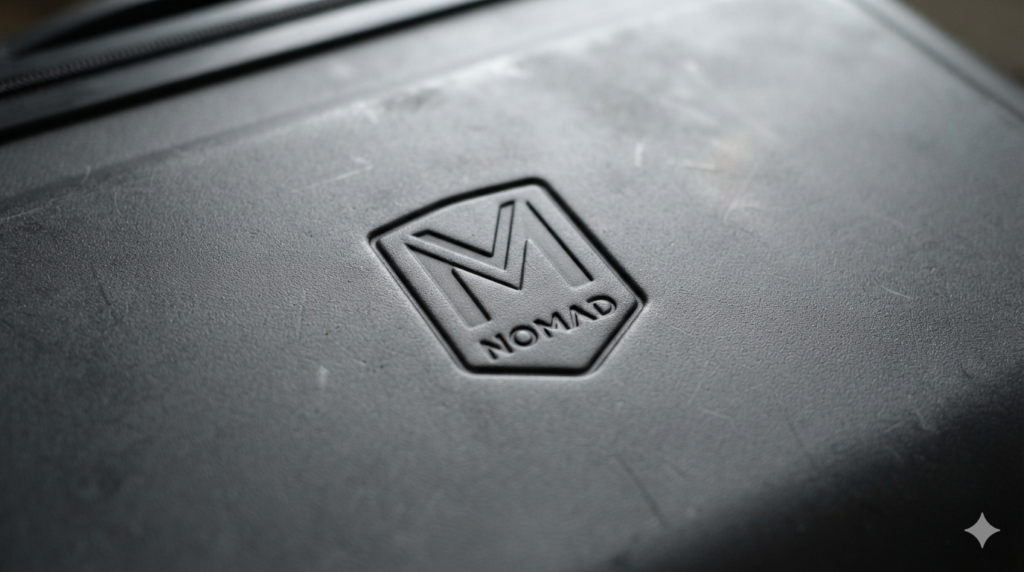
- Debossing (Recessed Branding): Compresses the material downward, sinking the logo into the matrix of the substrate. In luggage OEM manufacturing, Debossing is the golden standard. Because the branded graphic sits beneath the outer surface level, the surrounding material acts as a physical shield, protecting the impression from ambient shear forces and abrasion.
Primary OEM Application Pathways
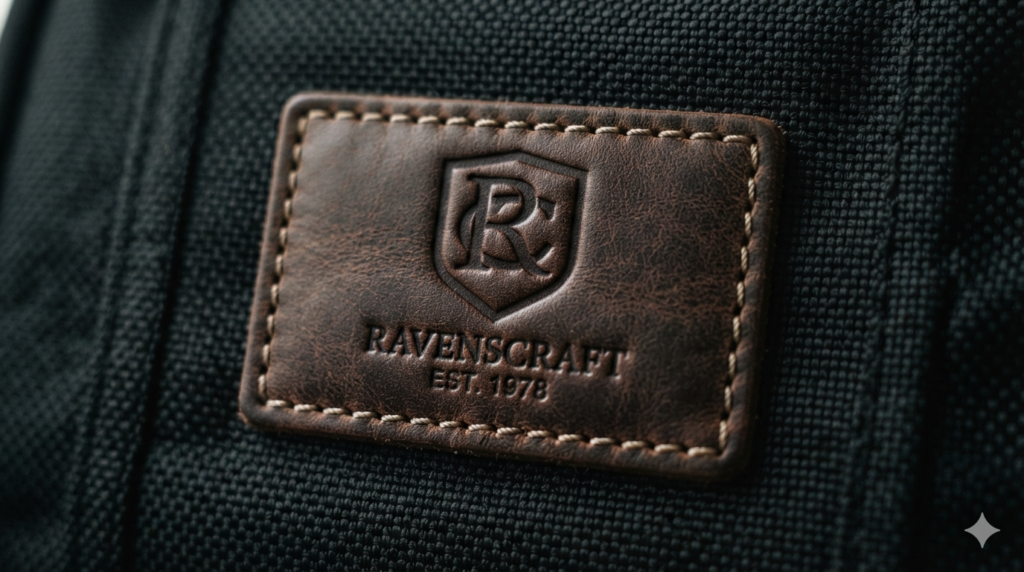
- Stitched Leather & Microfiber Patches (Softside Luggage): A custom CNC-machined brass or steel die is heated to 120°C–160°C and applied under 2 to 5 tons of pneumatic pressure onto genuine leather, microfiber, or heavy-duty PU. This creates a dark, crisp, permanently recessed logo patch, which is then double-stitched onto ballistic nylon or canvas outer panels.
- In-Shell Molded Tooling (Hardside PC/ABS): Rather than adding post-production branding, the debossed logo is engineered directly into the CNC aluminum vacuum-forming mold. When heated Polycarbonate (PC) sheets are vacuum-formed into the mold cavity, the recessed logo is molded natively into the structural shell—eliminating secondary labor steps entirely.
💡 Debossing vs. Embossing Rule of Thumb: For travel gear, Debossing (pressed inward) is universally preferred over Embossing (raised outward). Inwardly recessed logos naturally shield the brand mark from abrasive airport conveyor belts and rough transport.
🛠️ Debossing Performance Summary
- Best For: Executive business luggage, luxury travel collections, leather accent patches, and high-margin hardside chassis.
- ✅ Pros:
- Indestructible Transit Durability: 100% immune to surface peeling, scratching, or ink degradation. The logo remains intact for the entire lifecycle of the suitcase.
- Tactile Luxury Aesthetic: Delivers a subtle, low-key, high-end “blind” finish that strongly appeals to corporate gift buyers and frequent business travelers.
- Zero Assembly Failure (In-Shell): Molded hard-shell logos eliminate secondary adhesives or stitching, reducing manufacturing defect risks.
- ❌ Cons:
- Tooling Overhead: Requires upfront investments in custom heated metal stamping dies ($150–$300) or CNC mold modification fees ($300–$800+ for hard-shell molds).
- Substrate Thickness Requirement: Can only be performed on compressible materials (leather, microfiber, thick synthetic leather) or thermal-formable plastics (PC/ABS). It cannot be applied directly to thin, single-ply woven fabrics.
Head-to-Head Comparison Matrix (The B2B Procurement Benchmark)
When evaluating logo techniques for a new OEM luggage production run, sourcing managers must balance aesthetic positioning against manufacturing economics and long-term transit durability. The matrix below provides a direct side-by-side technical evaluation across eight critical operational metrics to streamline your vendor specifications.
| Evaluation Metric | Screen Printing (Silkscreening) | Debossing (Recessed Impression) |
| Visual Style & Positioning | Casual, vibrant, high-contrast, promotional | Executive, low-key luxury, professional, tactile |
| Transit Durability | Moderate (Requires UV clear topcoat on hard shells) | Exceptional (100% immune to surface peeling or scuffing) |
| Optimal Substrates | Ballistic Nylon, Oxford fabric, PC/ABS smooth shell, lining | Leather/PU patches, microfiber, in-shell molded PC/ABS |
| Color Capability | Exact Pantone (PMS) matching & multi-color graphics | Monochromatic blind impression (Optional foil stamping) |
| Upfront Tooling / Setup | Low ($30–$50 stencil fee per color) | Moderate to High ($150–$300 die / $300–$800+ shell mold) |
| Mass Production Unit Cost | Extremely low for high-volume orders | Low after initial tooling amortization |
| MOQ Flexibility | Highly flexible (Ideal for 200–500+ unit trial runs) | Best suited for long-term core collections (500+ units) |
| Factory QA Compliance | Requires Cross-Hatch Adhesion testing (ASTM D3359) | Effortlessly passes Martindale Abrasion tests (ISO 12947) |
📌 OEM Sourcing Takeaway: Use Screen Printing when you need exact corporate brand colors on softside fabrics, complex multi-color artwork, or maximum unit-cost compression for promotional campaigns. Opt for Debossing when building executive carry-on lines, high-margin retail collections, or when zero-failure durability under airline handling is required.
Suitcase Material Compatibility Matrix
Selecting a logo technique in isolation without factoring in shell composition or fabric density leads to adhesion failures and structural deformation. Below is our factory-tested compatibility engineering guide mapping logo application methods against the five most common luggage raw materials.
🧳 Material-to-Technique Compatibility Matrix
- 1. Polycarbonate (100% Virgin German Bayer / Covestro PC)
- In-Shell Molded Debossing: ⭐⭐⭐⭐⭐ (Gold Standard) — Molded natively during thermal vacuum forming. Zero post-processing required; indestructible.
- Screen Printing w/ Protective UV Coat: ⭐⭐⭐⭐ (High Performance) — Delivers sharp graphics, but requires surface corona treatment (dyne level > 38) and an anti-scratch UV lacquer layer.
- 2. ABS & PC/ABS Composite Alloys
- In-Shell Molded Debossing: ⭐⭐⭐⭐⭐ (Recommended) — Exceptional structural sharpness due to ABS’s rigid molding characteristics.
- Direct Screen Printing: ⭐⭐⭐ (Conditional) — Textured/grain ABS surfaces cause ink bleeding; only suitable on smooth or fine-grain sheet surfaces.
- 3. 1680D Ballistic Nylon & Heavy-Duty Canvas (Softside)
- Stitched Debossed Leather/Microfiber Patch: ⭐⭐⭐⭐⭐ (Executive Style) — Provides high structural support, thermal insulation, and an ultra-premium tactile anchor point.
- Direct Screen Printing: ⭐⭐⭐⭐ (Budget-Friendly) — Highly flexible; heavy woven yarns absorb ink well without peeling or cracking under load.
- 4. 600D / 900D Polyester & Oxford Fabrics
- Direct Screen Printing: ⭐⭐⭐⭐⭐ (Cost-Optimal) — Smooth fabric weave accepts solvent ink seamlessly for crisp edge definition.
- Direct Debossing: ⭐ (Not Recommended) — Thin synthetic fabrics melt or scorch under the 130°C+ thermal stamping pressure without a leather backing patch.
- 5. Aluminum-Magnesium Alloy Shells
- Laser Engraving / CNC Milling: ⭐⭐⭐⭐⭐ (Native Premium) — Permanent metallic contrast without adding chemical inks.
- Screen Printing (Epoxy-Based Ink): ⭐⭐⭐ (Conditional) — Requires specialized two-component epoxy ink to adhere to anodized aluminum finishes.
Strategic Multi-Position Branding (Unlocking Secondary Margins)
While a primary shell logo establishes immediate brand recognition, seasoned B2B sourcing managers know that luxury perception and retail price justification are built in the subtle micro-details. Strategically layering secondary branding across high-touch functional components transforms a basic suitcase into a cohesive, high-margin product ecosystem.
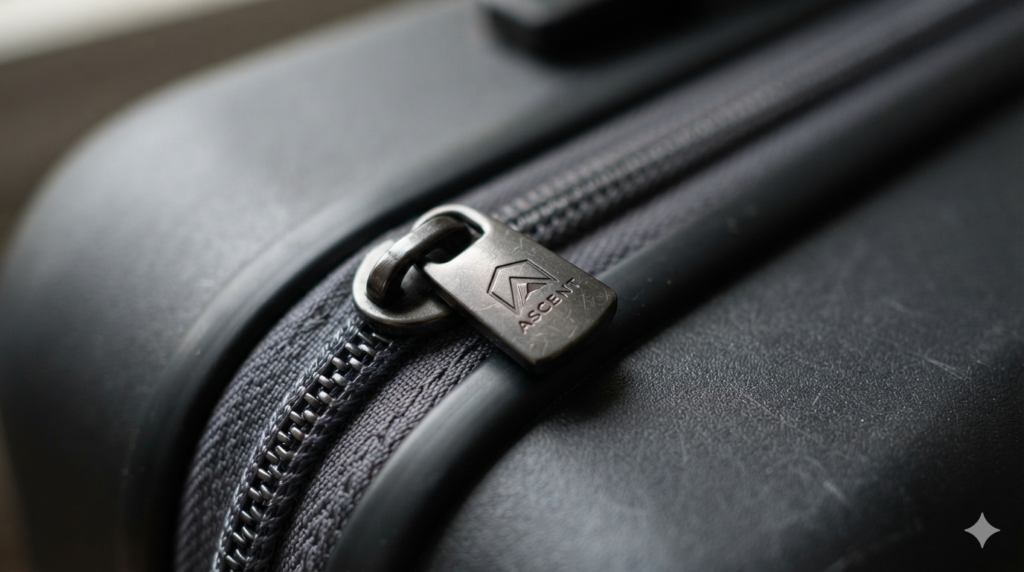
4 Hidden High-Value Branding Touchpoints
- Die-Cast Zinc-Alloy Zipper Pulls: Replacing off-the-shelf sliders with custom die-cast zinc-alloy or recessed PVC rubber zipper pulls. Every interaction with the main compartment reinforces brand quality through weight, tactile finish, and smooth action.
- Laser-Engraved Trolley Handle Tubes: Precision fiber laser engraving on anodized aluminum telescoping rods. Fiber lasers strip the anodized surface layer to reveal a crisp, permanent metallic contrast that will never scratch off during extension or retraction.
- Co-Branded Wheel Hub Caps: Inset epoxy resin dome emblems or molded plastic caps fitted onto the center axis of 360° dual spinner wheels. This detail catches dynamic visual attention as the luggage glides through airport terminals.
- Full-Coverage Printed Interior Lining: Utilizing rotary screen printing or dye-sublimation on 150D/210D polyester interior lining. A custom step-and-repeat logo matrix creates a memorable “unboxing” visual moment whenever the traveler unzips their suitcase in a hotel room.
💎 B2B Margin Enhancement Strategy: Implementing secondary micro-branding across all four functional touchpoints typically adds less than $1.50–$2.50 to total BOM (Bill of Materials) costs, while elevating perceived retail value by 20% to 35%.
B2B Procurement Decision Framework & Factory QA Standards
To prevent costly batch rejections and ensure long-term transit performance, sourcing managers must adopt a disciplined vetting framework. Evaluating logo techniques requires aligning your brand’s retail positioning with empirical, laboratory-tested factory quality assurance protocols.
The 3-Step OEM Sourcing Decision Framework
1.Align Technique with Price Point & Target Margin:Risk Mitigation Phase。
- Promotional / High-Volume Lines ($40–$80 Retail): Select direct Screen Printing to maximize unit-cost efficiency.
- Executive / Premium Lines ($150+ Retail): Specify Debossed Leather/Microfiber Patches or In-Shell Molded Logos to justify premium retail pricing.
2.Assess Substrate Surface Tension & Material Physics:Technical Verification Phase。
Verify that PC or ABS hard shells meet a minimum surface tension threshold (Dyne level > 38) prior to screen printing. For debossed leather patches, mandate a minimum substrate thickness of 1.2mm to prevent thermal blow-through during heat pressing.
3.Enforce Mandatory Factory QA Laboratory Testing:Compliance & Audit Phase。
Require the OEM factory to provide certified lab test reports from pre-production sample batches before issuing bulk production sign-off.
Non-Negotiable Factory QA Testing Standards
To guarantee that branded suitcases withstand harsh airline handling, your OEM quality agreement should mandate three core laboratory test standards:
- Cross-Hatch Tape Adhesion Test (ASTM D3359): A lattice pattern is cut through the printed ink coating on the hard shell down to the PC/ABS substrate. Certified pressure-sensitive tape is applied and abruptly pulled off. Acceptable Standard: Class 4B/5B (0% ink detachment permitted).
- Martindale Wear & Abrasion Test (ISO 12947): Debossed leather patches and synthetic microfiber labels are subjected to continuous friction cycles under controlled pressure. Acceptable Standard: No surface tearing, fiber fraying, or logo depth reduction after 10,000 continuous abrasion cycles.
- Environmental Thermal Shock Test: The branded luggage panel is placed in a climate chamber and cycled between -20°C and +65°C across 48 hours to simulate aircraft cargo holds and tropical transport. Acceptable Standard: Zero micro-cracking, blistering, or adhesion failure.
Conclusion & Actionable B2B Call-to-Action
In professional luggage manufacturing, there is no single “best” logo technique—only the right method for your specific material, target price point, and transit durability requirements. Balancing initial tooling costs against real-world airline handling ensures your branded collection stands out on the baggage carousel while protecting your profit margins.
🛠️ Ready to Elevate Your Custom Suitcase Line?
Eliminate sampling guesswork and avoid costly production rejections. Send us your vector artwork (.AI / .EPS) and luggage specifications today—our OEM/ODM engineering team will deliver a FREE Branding Feasibility & Cost Assessment Report within 24 hours.Contact Us